ServicesTankless Water Heaters
Tankless Water Heater Installation in Nashville
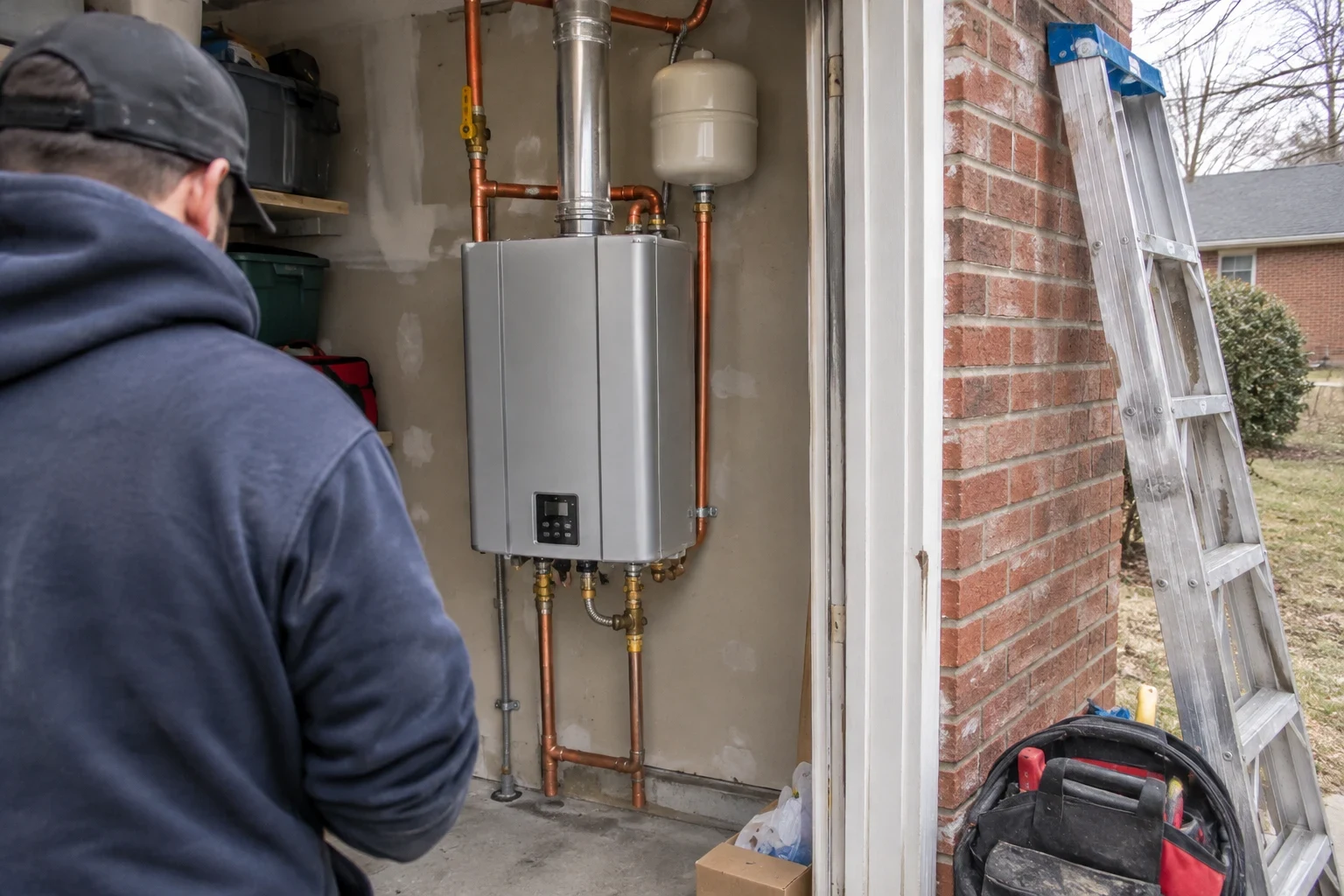
Endless hot water starts with a unit sized for your home and a gas line and vent that can keep up. We plan the swap with you, cover your floors, protect the yard where we work outside, and explain each step before we start.
A tankless heater only works as well as its installation
A tankless water heater heats water as it flows instead of keeping 40 or 50 gallons hot all day. That saves space and standby energy, and it means you stop running out halfway through the third shower. The catch is that the unit needs the right fuel supply, venting and water connections, and most homes were plumbed for a tank.
Our job is to make that switch cleanly. We check whether your gas line can deliver enough volume, where the new vent can exit, and whether a condensate drain is needed. Then we tell you plainly what has to change and why, so nothing on install day comes as a surprise.
We treat your home like a place people live in. Drop cloths go down from the door to the work area, we wear shoe covers inside, and we keep you posted as the day goes.
What your installation includes
Sizing for real use
We count your fixtures and talk through how your household uses hot water. Flow rate and temperature rise decide the unit size, not the brochure.
Gas or electric supply
Gas units often need a larger gas line than an old tank used, and we check that before quoting. Electric units need a dedicated circuit with enough capacity, and we tell you up front if your panel can handle it.
Venting and condensate
High-efficiency units vent through PVC to a side wall or the roof, and they produce condensate that needs a proper drain. We route both neatly and seal every wall penetration.
Service valves for descaling
We install isolation valves so the heat exchanger can be flushed. Nashville water carries enough minerals that this simple flush keeps the unit running efficiently for years.
Old tank removal
We drain the old tank through a hose run to a spot that will not soak your beds or lawn, then carry it out and haul it away.
Permit and cleanup
We pull the permit the work requires and leave the area swept and wiped down, with the new unit labeled and the controls explained.
Signs it may be time to go tankless
- Hot water runs out
- If the second or third shower turns lukewarm, your tank cannot keep up with your household. A properly sized tankless unit keeps delivering as long as the tap is open.
- Your tank is getting old
- Most tank heaters wear out after 8 to 12 years. Planning the switch before it fails lets you choose the timing instead of reacting on a cold morning.
- Rust or rumbling
- Rusty hot water, popping sounds or water pooling around the base mean the tank is breaking down inside. That is a good time to talk about a replacement.
- You need the space back
- A wall-mounted unit frees up the closet or corner the tank used. Many homeowners turn that space into storage.
- Planning a remodel or addition
- Adding a bathroom changes your hot water demand. It is easier to size a tankless heater during the planning than after the walls are closed.
How install day goes
- 1
A walk-through and free estimate
We look at your current heater, gas meter, electrical panel and possible vent routes. You get a written estimate that lists each part of the job, including any gas line or electrical work.
- 2
Protecting your home
On install day we lay floor coverings along our path and around the work area. Outside, we place mats where we kneel or set tools so your mulch and grass stay intact.
- 3
Removing the old heater
We shut off the water and fuel, drain the tank and take it out. The hot water is off for the day, and we let you know before it goes off and when it comes back.
- 4
Mounting and connecting
We mount the unit, run the gas or electrical supply, connect the water lines with service valves, and install the vent and condensate drain. Every connection is tested before we fire it up.
- 5
Walk-through and cleanup
We show you the controls, how to set the temperature, and what yearly maintenance looks like. Then we clean up and take the old tank with us.
What affects the cost
The price of a tankless install depends less on the unit and more on what your home needs to feed and vent it. Two houses on the same street can need very different work. Your written estimate breaks out each piece, and we walk you through every line before you decide. Financing options are available, and we take cash or any major credit card.
- Unit size and type
- A home with several bathrooms needs more output than a small one. Condensing gas units cost more at the start but burn less fuel over time.
- Gas line upgrades
- Many older gas lines were sized for a tank and cannot carry enough fuel for a tankless burner. When that happens, the line gets upsized from the meter, and it is the extra cost we see most often in a conversion.
- Venting route
- Going straight out a nearby wall is a simpler job than running vent pipe through an attic or up through the roof.
- Electrical work
- An electric unit can call for new breakers, heavier wire or a bigger panel. We look at your panel first, before you agree to anything.
- Location changes
- Leaving the new unit where the tank stood keeps costs down, because the water lines do not have to move.
Tankless water heater questions
- How long does a tankless installation take?
- Most straight swaps are finished in one day. If the gas line needs to be upsized or the unit is moving to a new spot, it can take longer. We give you a realistic timeline with the estimate so you can plan around it.
- Can a tankless heater run two showers at once?
- Yes, if it is sized for that. We figure out how many fixtures you tend to run at the same time and how much the water needs to be heated, then match the unit to it. An undersized unit is the main reason people end up disappointed with tankless.
- Should I choose gas or electric?
- If you already have natural gas, a gas unit usually handles whole-home demand better. Electric units work well in smaller homes or where gas is not available, but they need a lot of electrical capacity. We look at what your home has and recommend what makes sense.
- What maintenance does a tankless heater need?
- Plan on flushing the heat exchanger about once a year to clear mineral buildup. The service valves we install make that a short job. Cleaning the inlet screen occasionally helps too.
- Will an outside or garage unit freeze in winter?
- Units have built-in freeze protection as long as they have power, and gas units stay protected while the gas is on. We insulate exposed lines, and we explain what to do if a winter storm knocks out your power.
Ready for hot water that keeps up?
Tell us about your home and your current heater, and we will set up a free estimate. If your old tank has already given out, our 24/7 emergency plumbing service can help you get hot water back.