ServicesWhole Home Water Filtration
Whole Home Water Filtration in Nashville
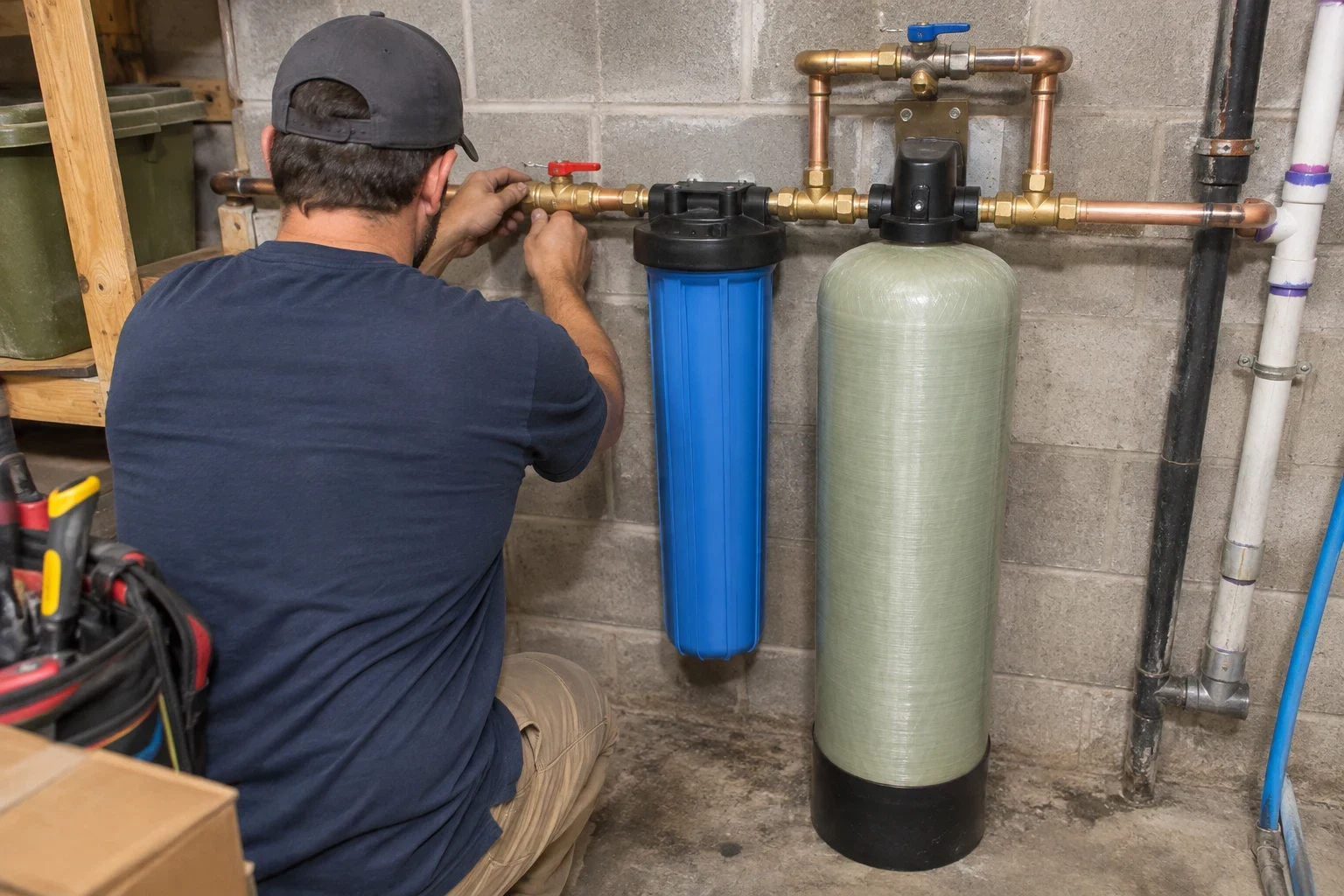
Better-tasting water at every faucet, softer-feeling showers and less buildup on fixtures. We test your water first, explain what we find in plain terms and install a system sized for your household, with drop cloths down and the work area left clean.
What a whole home system does for you
A whole home filter sits where the water line enters your house, so everything downstream gets treated: kitchen, bathrooms, laundry and the water heater. That is different from a pitcher or an under-sink unit that only cleans one tap.
City water in Nashville is safe to drink, but many people notice a chlorine taste or smell, gray sediment in toilet tanks, or white scale on faucets and shower glass. A properly chosen system takes care of those everyday annoyances and helps protect appliances from grit and scale.
Before we recommend anything, we check your water and talk with you about what bothers you. If a simple sediment and carbon setup will do the job, that is what we suggest.
What's included in the installation
- Water check and recommendation
- We test for the things that drive equipment choice, like hardness, chlorine and sediment. You get a clear explanation of what we found and why a particular system fits.
- Sediment prefilter
- A first-stage filter catches sand, rust and grit before it reaches the main tank. This protects the media downstream and keeps fine particles out of faucet aerators.
- Carbon filtration tank
- Activated carbon reduces chlorine taste and odor across the whole house. We size the tank to your number of bathrooms and typical water use so pressure stays steady.
- Bypass valve and shutoffs
- Every system gets a bypass so you keep water running during filter changes or service. We label the valves and show you how they work before we leave.
- Drain and power connections
- Backwashing systems need a nearby drain and an outlet. We route these neatly and tell you up front if your setup needs any extra work to make that happen.
- Walkthrough and cleanup
- We run water at several fixtures, check every fitting, and walk you through filter changes. Then we pick up our drop cloths and leave the area as clean as we found it.
Signs your home could use filtration
Chlorine smell in the shower
A pool-like odor when you run hot water is common with treated city water. Carbon filtration takes most of it out before it reaches you.
White crust on fixtures
Scale on showerheads, faucets and glass doors means minerals are settling everywhere water goes, including inside your water heater and dishwasher.
Grit in aerators or toilet tanks
Sand or rust flakes that keep clogging faucet screens point to sediment in the supply. A prefilter catches it at the source.
Buying bottled water for taste
If your family avoids tap water because of how it tastes, a whole home system usually solves that for drinking, cooking and ice.
New tankless heater or appliances
Scale and sediment shorten the life of tankless units and other water-using appliances. Filtering first is a sensible way to protect that investment.
How installation day works
- 1
We call ahead
You'll hear from us before we arrive, with a realistic time window. If anything changes, we tell you instead of leaving you waiting.
- 2
Protect the work area
We put down floor runners from the door to the install spot and lay tarps if the main line is outside near beds or shrubs. Shoe covers go on before we step inside.
- 3
Shut off and install
Water is off only as long as needed to cut in the system, usually a few hours. We mount the tanks, connect the bypass and plumb the drain line.
- 4
Flush, test and explain
We flush new media, check for drips at every joint and test water at the tap. Then we show you the valves, the filter schedule and what to watch for.
What shapes the price of your system
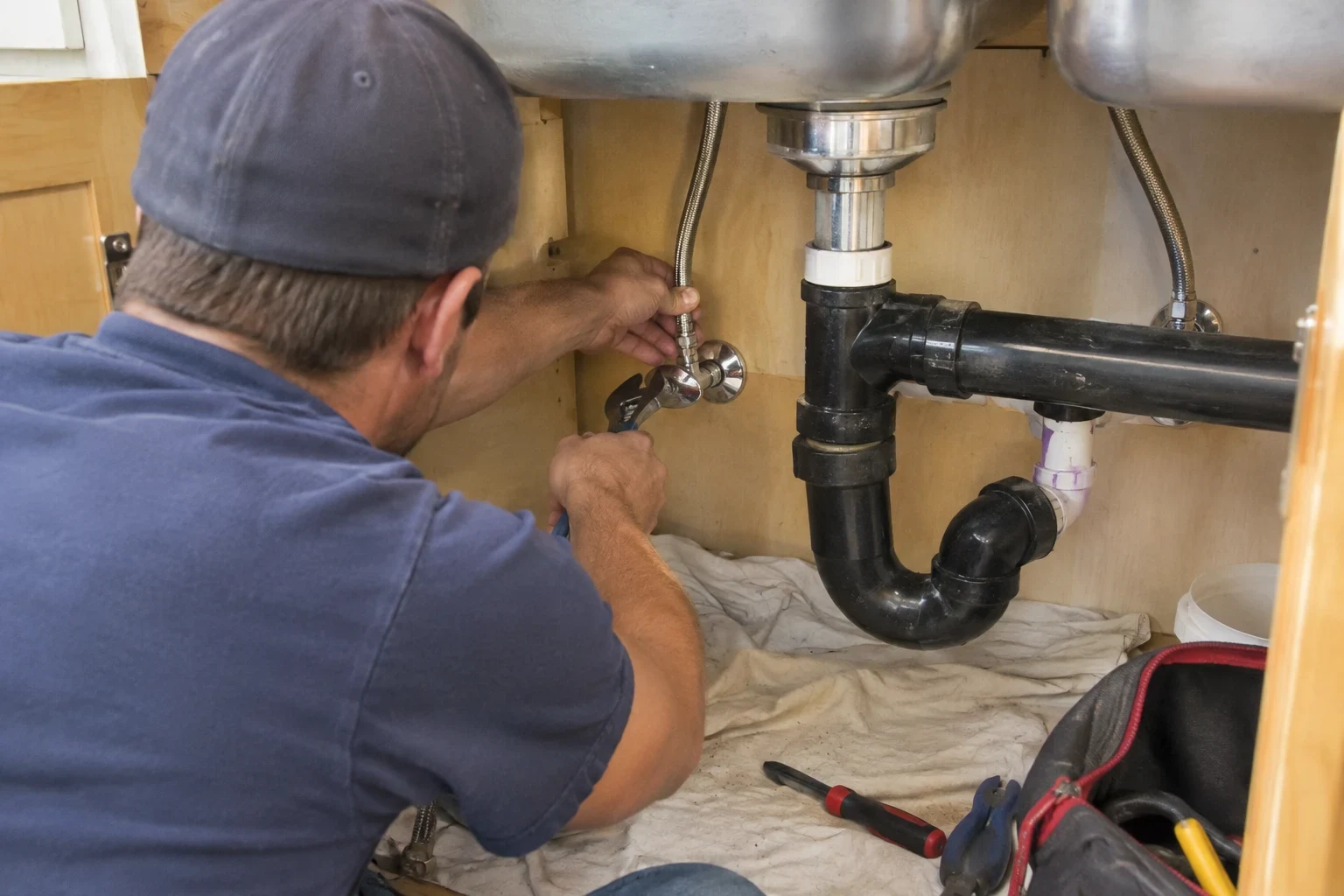
No two houses have the same water or the same layout, so we price the job once we have seen the space and tested what comes out of your tap. The estimate costs you nothing, and it is written out before any work begins. Financing options are available if you would like to spread out the cost, and you can pay with cash or any major credit card.
- What testing turns up
- Water that only needs chlorine reduction calls for a simpler setup than water that also brings heavy sediment or hardness. The test shows us which stages your home really needs, so you are not paying for extras.
- How many people and bathrooms
- A busy morning with several showers running takes more flow. Larger households need bigger tanks so pressure holds up at every tap.
- Where the system goes
- A garage or basement close to the main line is the easiest spot. A crawlspace or outdoor install takes longer and may need a protective enclosure.
- Getting to a drain and outlet
- Systems that backwash need a drain and power close by. If neither is near the install spot, we explain what it takes to bring them over before you make a decision.
Common questions about whole home filters
Something not covered here? (615) 326-6602
Is my water pressure going to drop after the install?
You should not notice a difference if the system is sized right. We choose the tank and valve size based on how much water your household uses at once. Pressure problems almost always come from a unit that is too small, which is why we size for your busiest hour.
Can a carbon filter take care of hard water?
It cannot. Carbon reduces chlorine taste and smell along with some other contaminants, but dissolved minerals go right through it. If white scale is what bothers you most, we will go over scale-reduction choices with you during the estimate.
How often will I need to replace the filters?
The sediment prefilter gets changed more often than the media in the main tank. Exactly how often depends on your water quality and how much your family uses. We give you a schedule that fits your home and show you how to swap the prefilter yourself.
Where in my house does the system get installed?
Usually near the spot where the main line comes in, which is often a garage, basement or utility room. When the line enters outdoors, we can mount the system outside and lay tarps so your beds and shrubs are protected while we work.
Does it make sense to add filtration before a tankless water heater?
In most homes, yes. Grit and mineral scale wear on tankless units faster than on tank heaters. If you are also considering tankless water heater installation, we can plan the two jobs together so they fit well side by side.
Find out what's in your water
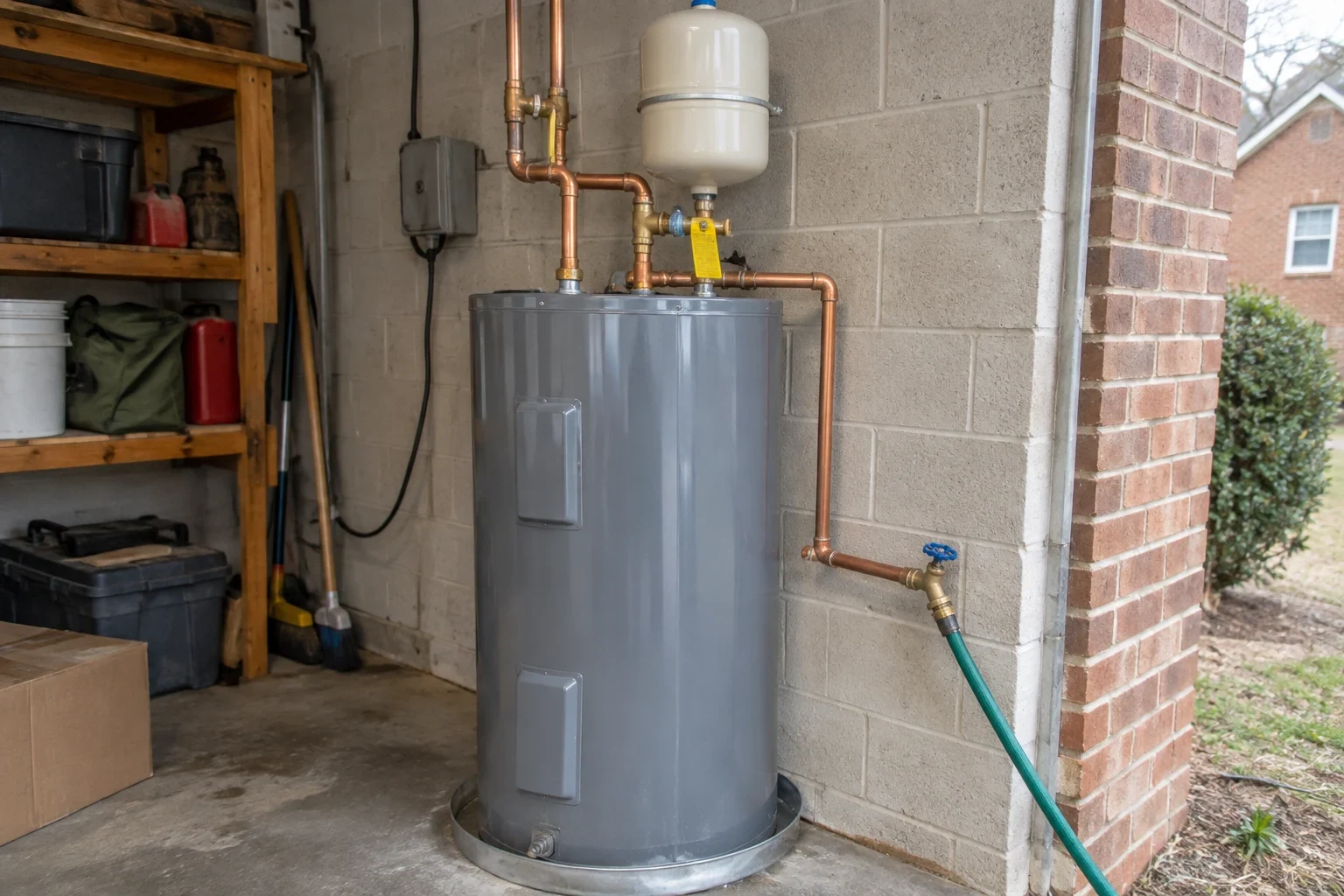
We'll come out, test your water and explain your options without pressure. If something else goes wrong with your plumbing, we're available 24/7 for emergencies too.